Wolverine Marvel Rivals Guide: How to Play From Beginner to Pro Player
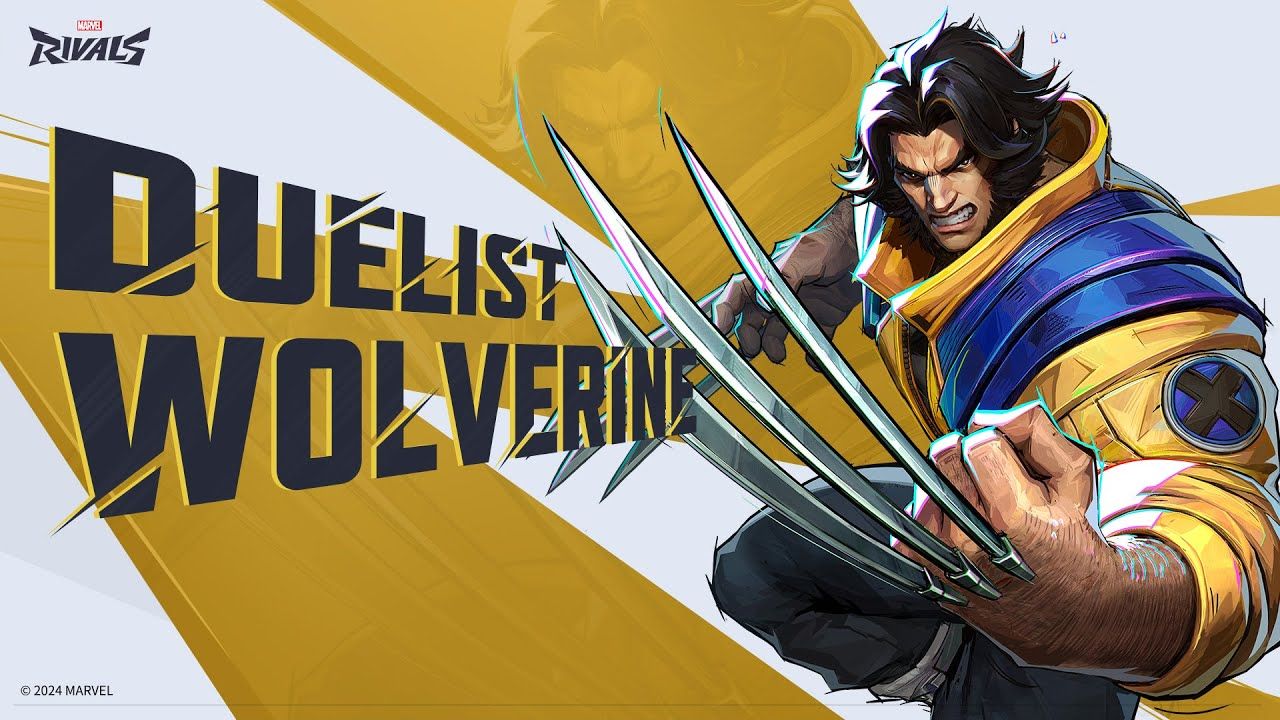
Wolverine stands out as the only Duelist in Marvel Rivals capable of dealing damage equal to 45% of an enemy's maximum health per second, making him one of the most lethal close-range fighters in the game.
This unique Duelist operates with 350 health and 7 m/s movement speed, positioning him as the premier hunter of high-health targets across all game modes. His Savage Claw basic attack delivers 15 damage per strike plus an additional 1.5% of the target's maximum health, establishing him among the few characters whose damage output scales directly with enemy survivability.
Wolverine's Berserker Rage passive ability defines his combat effectiveness, allowing players to accumulate up to 100 rage points through enemy engagement and damage absorption. The Feral Leap ability serves as his signature engagement tool, featuring a 12-second cooldown that enables mid-air tackles followed by devastating ground slams.
This guide covers everything from fundamental ability management to advanced tactical applications that separate skilled Wolverine players from the competition. Whether you're starting fresh or looking to refine your current approach, these strategies will develop your understanding of one of Marvel Rivals' most distinctive Duelists.
Understanding Wolverine's Role in Marvel Rivals
Wolverine operates as a specialized tank-buster rather than a traditional Duelist, filling a unique niche that most other damage dealers cannot match effectively.
Why Wolverine is different from other Duelists
Most Duelists excel at burst damage against squishy targets, but Wolverine takes the opposite approach entirely. His percentage-based damage system makes him the premier counter to high-health opponents, allowing him to maintain consistent threat levels regardless of enemy armor or defensive capabilities.
The Berserker Rage mechanic separates him from every other Duelist in the roster. Instead of simple cooldown management, Wolverine players must constantly balance rage generation with optimal spending windows. This creates a rhythm-based playstyle that rewards aggressive engagement over cautious positioning.
When to pick Wolverine in your team
Wolverine dominates against tank-heavy compositions and struggles against mobile, low-health teams. Select him when:
Enemy composition features two or more Vanguard characters
Your team needs a dedicated flanker with backline pressure capabilities
The opposing team relies on sustained, high-health frontliners
Map design offers multiple flanking routes and vertical positioning opportunities
Teams with heavy crowd control or multiple mobile Strategists can effectively neutralize Wolverine's impact through coordinated kiting and displacement abilities.
Strengths and weaknesses overview
Strengths:
Unmatched effectiveness against tanks through percentage-based damage scaling
Self-sustaining combat presence via Undying Animal
Superior mobility options for engagement and disengagement
Excellent 1v1 dueling potential against most character archetypes
Rage system rewards sustained combat engagement
Weaknesses:
Vulnerability to ranged harassment and kiting strategies
Rage dependency limits immediate combat effectiveness
Susceptible to coordinated crowd control chains
Performance drops significantly against organized team coordination
Struggles against compositions with multiple low-health, high-mobility targets
Wolverine specializes in creating chaos through isolated engagements rather than traditional team fighting, making him ideal for disrupting enemy formations and eliminating priority targets. Understanding these core principles is essential before exploring his advanced combat techniques and tactical applications.
Mastering Wolverine's Abilities and Rage System
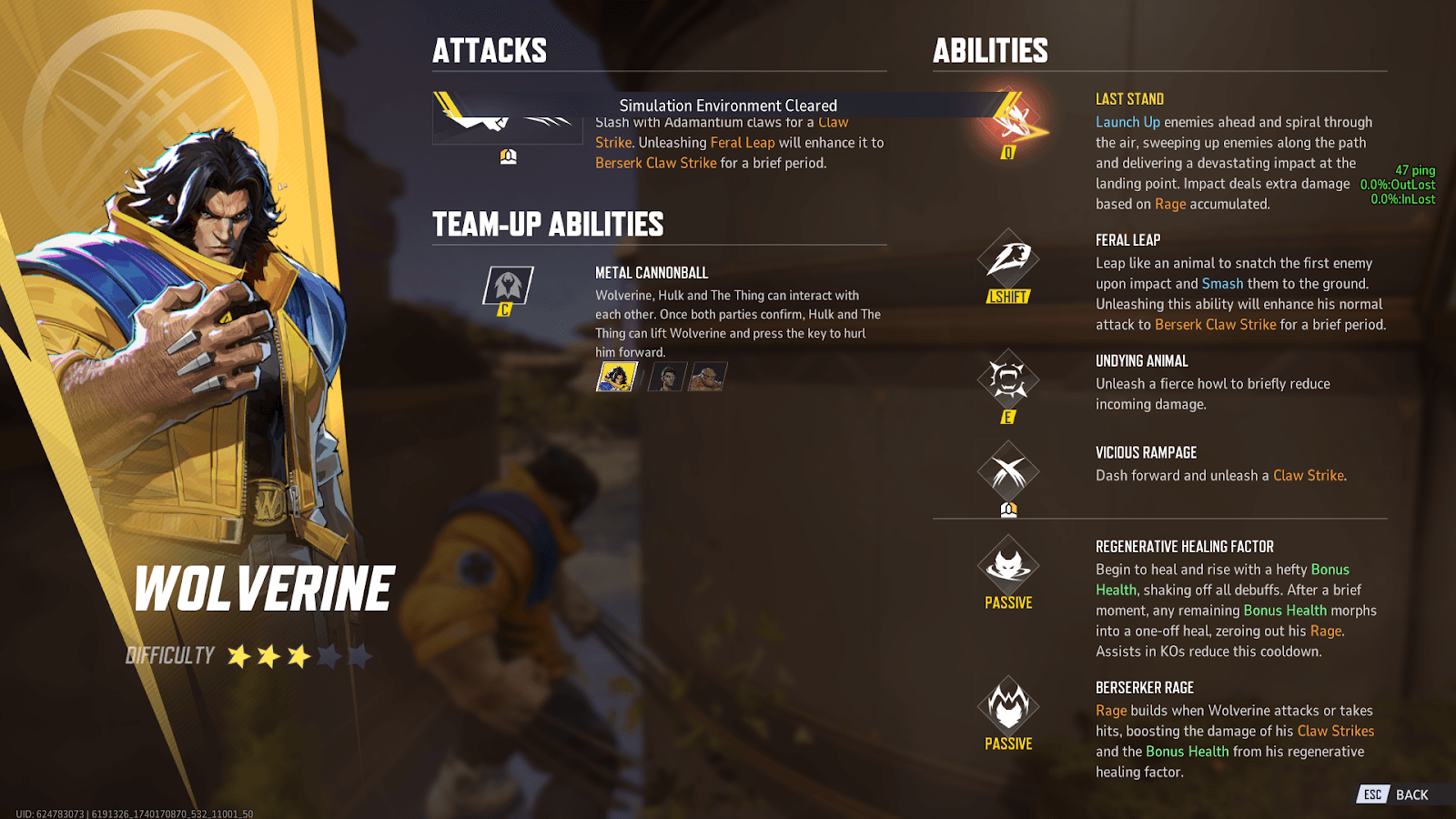
Wolverine's ability kit revolves around close-quarters combat mechanics that reward aggressive positioning and proper timing. Each ability serves a distinct tactical purpose while contributing to his overall rage generation and consumption cycle.
Savage Claw and Rage scaling
Savage Claw delivers 15 base damage per strike plus 1.5% of the target's maximum health, making it exceptionally potent against high-health opponents. At maximum Berserker Rage, attack speed increases substantially, allowing rapid damage application against priority targets.
Landing consecutive hits maximizes damage output, particularly against tanks where the percentage-based component becomes most effective. Target selection becomes crucial here - a full combo against a 600 HP tank deals significantly more damage than the same sequence against a 250 HP support.
Feral Leap and how to land it
Feral Leap operates on a 12-second cooldown and functions as both engagement and escape tool. Height advantages provide optimal positioning for surprise attacks, while mid-air application catches fleeing opponents or enables quick disengagement from unfavorable encounters.
The leap-and-slash combination proves most effective when immediately followed by Savage Claw strikes. Practice this sequence to secure quick eliminations before opponents can react or call for assistance.
Undying Animal and damage mitigation
Undying Animal grants 40% damage reduction while maintaining full offensive capability. Activate this ability during multi-opponent engagements or when diving enemy backlines where focus fire becomes likely.
This ability works defensively against enemy ultimates and offensively when initiating high-risk plays. The damage reduction doesn't prevent attacking, so maintain pressure while benefiting from the survivability boost.
Last Stand and when to use it
Last Stand unleashes rapid slashing attacks that consume all accumulated rage for maximum damage output. Ultimate ability timing requires full rage meters to achieve peak effectiveness, making it ideal against grouped enemies or priority targets like healers.
Reserve this ability for decisive moments where the damage potential justifies spending your entire rage reserve. Grouped opponents provide the best targets for maximizing Last Stand's area damage.
Berserker Rage: building and spending
Berserker Rage defines Wolverine's combat rhythm through its generation and consumption mechanics. Enemy attacks generate 5 rage per hit, while taking damage provides 2 rage per 1% health lost.
Rage accumulation presents tactical decisions: immediate spending for burst benefits versus continued building for enhanced attack speed. Proper rage cycling often determines battlefield effectiveness, requiring constant awareness of your current rage level and optimal spending opportunities.
How to Best Play Wolverine in Marvel Rivals
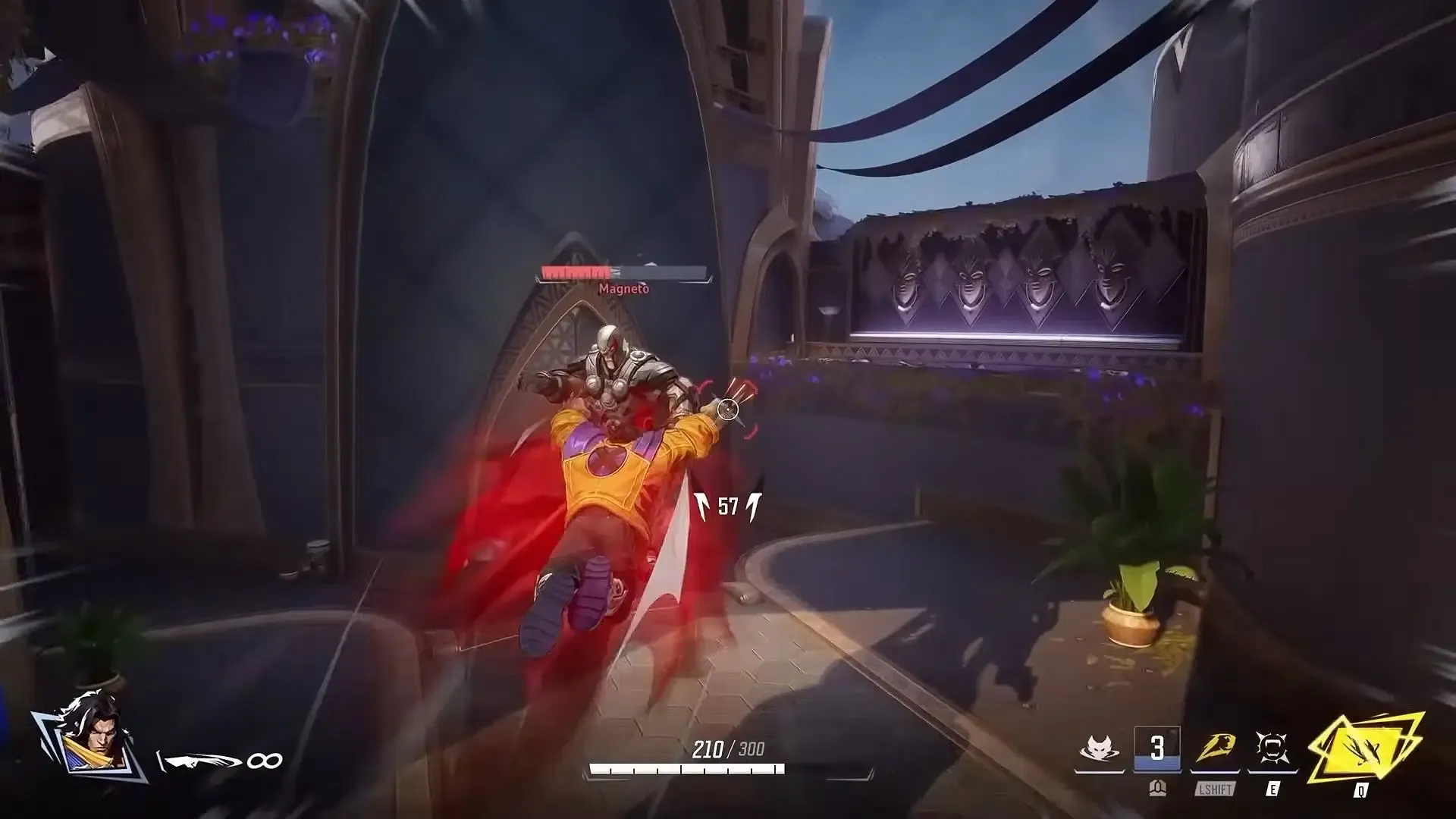
Wolverine rewards calculated aggression over mindless rushing, requiring a tactical mindset that many Duelist players struggle to master.
Flanking and positioning tips
Smart positioning separates average Wolverine players from dominant ones. Establish yourself behind walls or corners where you can observe enemy movements before committing. Set up slightly ahead of your team while staying hidden from enemy sightlines. High ground, flanks, and unexpected angles become your best friends when hunting priority targets.
Wait for enemy tanks to engage with your damage dealers before making your move. Keep one mobility ability ready for emergency escapes at all times. Patience often proves more valuable than mechanical skill when playing this character effectively.
Target priority: who to focus first
Wolverine's percentage-based damage fundamentally changes target selection compared to other Duelists. Your elimination priority should follow this order:
Vanguards/Tanks
High-Health Non-Tanks
Isolated Supports
Other Duelists
This approach maximizes your damage potential since 600+ HP tanks take significantly more damage from your abilities than 250 HP characters.
Combo patterns for different situations
Basic Tank Buster: Activate Undying Animal → Dash with Vicious Rampage → Land 4 Savage Claw hits → Feral Leap → Finish with Berserker Claw Strikes.
Tank Abduction: Use Vicious Rampage to get behind a tank → Immediately Feral Leap to grab them → Pull them toward your team.
Damage Reset: After four basic attacks, use Vicious Rampage to reset your attack timer, then continue with more basic attacks for approximately 600 damage in two seconds.
Game mode strategies: Convoy, Domination, Convergence
Convoy matches demand different approaches for each side. Stay close to your team during defense, waiting for openings between ranged DPS and Strategists. Switch to eliminating ranged Duelists when attacking.
Domination rewards isolation tactics above team fighting. Let your teammates control space while you position at choke points. Strike isolated enemies and retreat before reinforcements can respond.
Convergence requires adaptive positioning. Defend by staying slightly ahead of your team to intercept mobile threats. Focus on eliminating enemy Strategists during attacks to cut off healing support.
Wolverine Counters and Team Synergy
Wolverine's effectiveness diminishes significantly against specific hero matchups and team compositions that exploit his close-range limitations.
How to play against Wolverine in Marvel Rivals
Medium-range engagement distances neutralize Wolverine's primary advantage in close-quarters combat. Forcing unfavorable positioning prevents him from utilizing his percentage-based damage effectively. High ground positioning becomes particularly valuable, as Wolverine must expend his crucial Feral Leap ability simply to reach elevated positions. Coordinated focus fire during his engagement attempts prevents his self-sustain abilities from activating properly.
Best heroes to counter Wolverine
Several heroes possess abilities specifically designed to shut down aggressive melee fighters:
Mantis: Sleep ability interrupts Wolverine's combo sequences entirely
Luna Snow: Freeze effects disable his mobility while providing team healing
Peni Parker: Web-based crowd control restricts movement options significantly
The Winter Soldier: Hook ability creates immediate elimination opportunities, while his Ceaseless Charge passive allows for sustained pressure
Invisible Woman: AOE bubble effects completely disable Feral Leap functionality
Ideal teammates and team-up abilities
Wolverine reaches maximum potential alongside specific hero combinations:
Hulk/The Thing: "Fastball Special" team-up launches Wolverine across battlefields for surprise engagements
Phoenix: "Primal Flame" team-up adds fire damage during Feral Leap executions
Adam Warlock: Healing support enables sustained aggressive positioning
Tips for surviving bad matchups
Movement-impairing abilities such as slows, freezes, and stuns effectively neutralize Wolverine's combat effectiveness. Maintaining positional awareness prevents surprise flanking attempts that define his playstyle. Wolverine struggles most against coordinated teams capable of delivering concentrated damage before his healing abilities activate.
When facing the Winter Soldier, be cautious of his hook ability and Ceaseless Charge passive, which can disrupt your engagement patterns. Consider reading a Winter Soldier guide to better understand his capabilities and how to counter them effectively.
Conclusion
Wolverine represents one of Marvel Rivals' most specialized Duelists, designed specifically for players who understand the value of patience and calculated aggression. His percentage-based damage system creates a unique niche that separates him from conventional burst-damage characters, making him particularly valuable against tank-heavy compositions.
The key to Wolverine's effectiveness lies in understanding his role as a disruptor rather than a traditional flanker. His ability to threaten high-health targets consistently makes him a constant concern for enemy teams, forcing them to adjust their positioning and resource allocation. This psychological pressure often proves as valuable as his direct combat contribution.
Successful Wolverine players recognize that his Berserker Rage system rewards sustained engagement over hit-and-run tactics. Unlike other Duelists who excel at quick eliminations, Wolverine's strength comes from maintaining pressure and building momentum through extended fights. This contrasts with heroes like the Winter Soldier, whose Ceaseless Charge passive allows for a more sustained offensive presence.
Team coordination becomes essential when playing Wolverine effectively. His dive potential paired with heroes like Hulk or Adam Warlock creates opportunities that other character combinations simply cannot match. The Fastball Special team-up ability alone can change the dynamic of entire matches when used strategically.
However, Wolverine's limitations against coordinated crowd control and kiting strategies mean that player skill expression comes through positioning and timing rather than pure mechanical execution. The difference between effective and ineffective Wolverine play often comes down to engagement selection and rage management.
These tactical considerations make Wolverine an excellent choice for players who enjoy strategic depth in their character selection. His learning curve rewards time investment, and mastering his unique mechanics provides a distinct competitive advantage in the current Marvel Rivals meta. While heroes like the Winter Soldier may offer more straightforward playstyles, Wolverine's complexity and potential for high-impact plays make him a rewarding choice for dedicated players.