Marvel Rivals Characters Who Are Masters of Strategy
Strategy shapes more of our daily decisions than most people realize. We use it when negotiating a salary, planning a road trip, managing a budget, or even deciding when to speak and when to stay quiet in a difficult conversation. At its core, strategy is about accurately reading a situation, identifying your resources, anticipating how others will respond, and committing to a course of action that yields the best possible outcome.
Even when we consider our entertainment habits, something many assume has nothing to do with strategy, we start to see strategic patterns everywhere. Casino enthusiasts who choose to play on a no license casino site, for instance, apply deliberate strategy when engaging with table games like poker, blackjack, and baccarat.
But many Marvel Rivals characters have also mastered strategy at an exceptional level. These aren't just powerful fighters; they are thinkers who approach every engagement with precision, preparation, and an understanding of how their enemies operate. Some rely on technology, others on centuries of experience, and a few on raw intellectual dominance. The following characters stand out as the most strategically formidable in the entire Marvel Rivals roster.
Doctor Strange
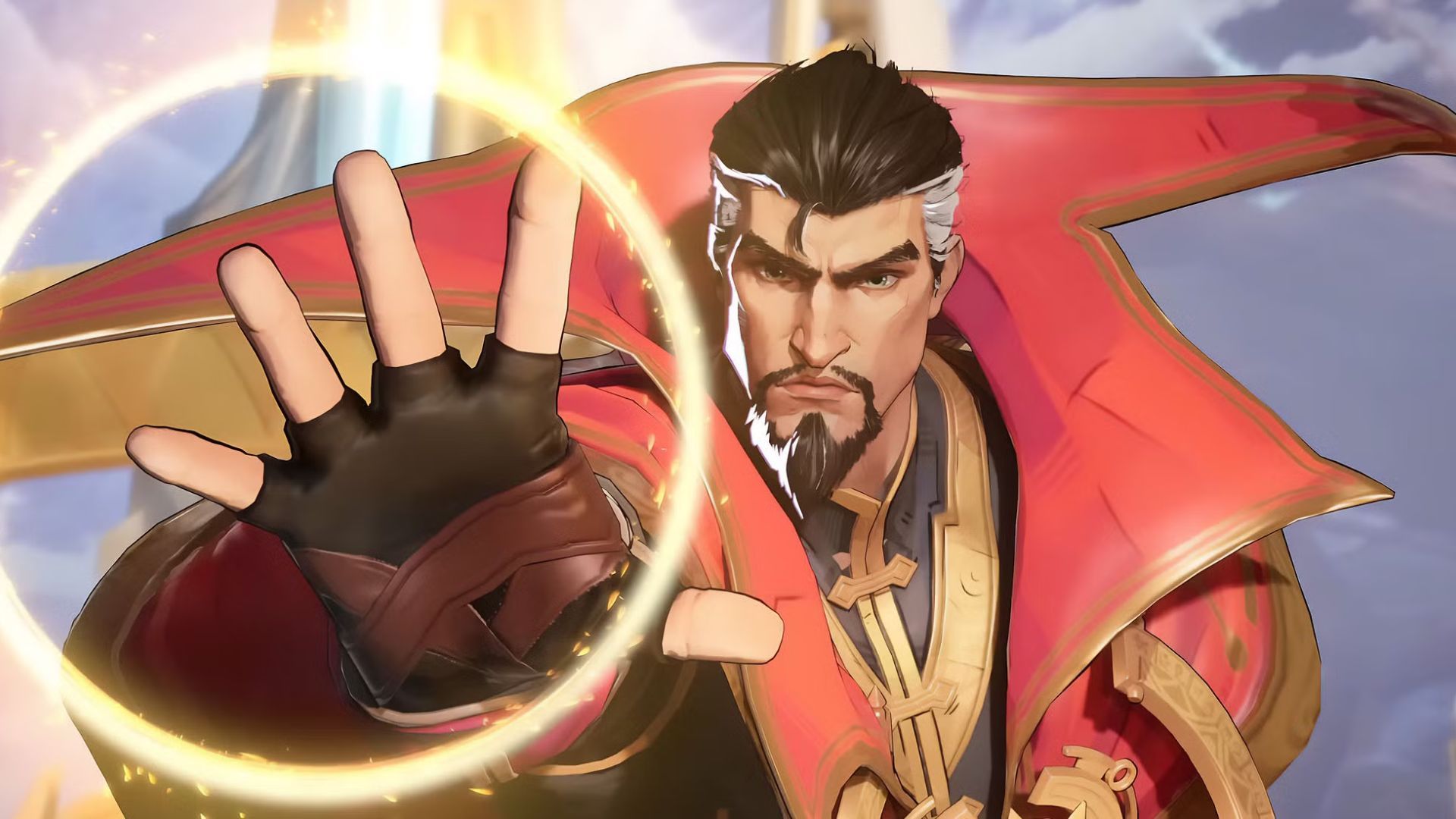
Stephen Strange is arguably the most tactically layered character in Marvel Rivals. His strategic depth comes not from brute force, but from his ability to perceive threats across multiple dimensions and timelines simultaneously.
As the Sorcerer Supreme, Strange has spent years studying outcomes, cataloging enemies' weaknesses, and understanding how magical systems interact. When he enters a fight, he is rarely reacting; he is executing a plan he formed long before the battle began.
In gameplay terms, Doctor Strange rewards players who think several steps ahead. His abilities are designed to control space, redirect incoming damage, and create openings for allies.
Players who treat Strange as a reactive healer consistently underperform with him. Those who treat him as a battlefield architect consistently dominate. That distinction between reaction and preparation is exactly what separates strategic play from instinctive play.
Loki
Few characters in any universe are as purely strategic as Loki. His entire identity is built around misdirection, manipulation, and the careful construction of situations where opponents defeat themselves.
Loki doesn't charge into a fight; he shapes the environment so that the fight goes the way he needs it to go before anyone realizes what's happening. He has overthrown kingdoms, turned gods against each other, and survived wars that should have destroyed him, not through strength, but through superior planning and an unmatched ability to read people.
In Marvel Rivals, Loki's kit reflects this perfectly. His illusions and clones create genuine confusion, forcing enemies to commit resources and attention to threats that may not be real.
His support abilities function as traps, baiting opponents into positions where their aggression becomes a liability. Playing Loki well means having a clear goal two or three exchanges ahead.
Black Panther
T'Challa approaches combat the way a chess grandmaster approaches the board; every position matters, and no move is wasted. As king of Wakanda, he has trained his entire life not just as a warrior but as a leader who must account for every variable in a conflict.
His intelligence is consistently ranked among the highest in the Marvel universe, and his tactical knowledge spans military strategy, hand-to-hand combat theory, and geopolitical maneuvering. He fights with the same mindset he uses to govern.
What makes Black Panther especially dangerous in Marvel Rivals is the combination of raw mobility and calculated aggression. He doesn't commit to an engagement unless he's already identified his exit, his backup plan, and his opponent's most likely response to his initial attack.
His vibranium suit absorbs kinetic energy, which means he can deliberately absorb punishment as part of a longer strategy, taking a hit now to deliver a devastating counter later.
Iron Man
Tony Stark's genius is often overshadowed by his personality, but the man is a systems thinker on a level that very few Marvel characters can match. He doesn't just build technology; he designs entire strategic frameworks.
Before stepping into a fight, Stark has already run simulations, identified vulnerabilities, pre-loaded countermeasures, and prepared contingency protocols for scenarios most fighters wouldn't even consider. The suit is the tool; the mind behind it is the actual weapon.
Iron Man in Marvel Rivals is built for players who understand resource management. His energy systems, his flight mechanics, and his ranged arsenal all require active management under pressure.
Overcommitting to offense drains his energy reserves and leaves him exposed. Staying too passive causes his team to lose map control. The ideal Iron Man player constantly balances output against sustainability, adapting their strategy as the fight evolves while always keeping long-term positioning in mind.
Magneto
Erik Lehnsherr has spent decades thinking about power: who holds it, how it's used, and how to dismantle it.
His strategic mind is shaped by survival, ideology, and a deep understanding of both human and mutant psychology. He doesn't just want to win fights; he wants to control the conditions under which fights happen. That's a fundamentally different and more sophisticated form of strategy than simply being the strongest person in the room.
His Marvel Rivals playstyle reflects this philosophical approach. Magneto excels at controlling the battlefield itself: reshaping terrain, redirecting projectiles, and creating zones that heavily favor his team's composition.
His best plays happen before enemies get close enough to engage properly. He denies positioning, limits options, and forces opponents into high-pressure situations where they must either retreat or make desperate moves. Desperation is exactly what Magneto wants. A rattled opponent makes mistakes, and Magneto has spent a lifetime turning other people's mistakes into his victories.