How to Counter Popular Team Compositions in Marvel Rivals
Marvel Rivals brings intense team-based combat to life, pitting iconic heroes and villains against each other in strategic battles. This competitive game demands more than just quick reflexes - success hinges on understanding team dynamics and mastering the art of counter-play.
Team composition stands as a critical element in Marvel Rivals. Each match becomes a chess game where players must:
Read opponent strategies
Select effective counter-heroes
Adapt tactics mid-game
Execute coordinated responses
This guide dives deep into popular team setups you'll face and equips you with practical counter-strategies. You'll learn specific hero matchups, tactical approaches, and key techniques to disrupt enemy team compositions.
Whether you're facing aggressive rush teams led by characters like Namor, who excels in ranged combat, defensive zone control setups featuring heroes such as Moon Knight with his enhanced abilities, or balanced meta compositions including versatile characters like Adam Warlock who supports his team through healing while dealing consistent damage, you'll discover proven methods to gain the upper hand.
These insights will help you make smarter hero selections and strategic decisions to climb the competitive ladder in Marvel Rivals. For example, if you're up against a team that relies heavily on close-range combat, knowing how to effectively counter with heroes like Magik, renowned for her exceptional close-range skills and battlefield mobility, could turn the tide in your favor.
1. The Importance of Team Compositions and Counters
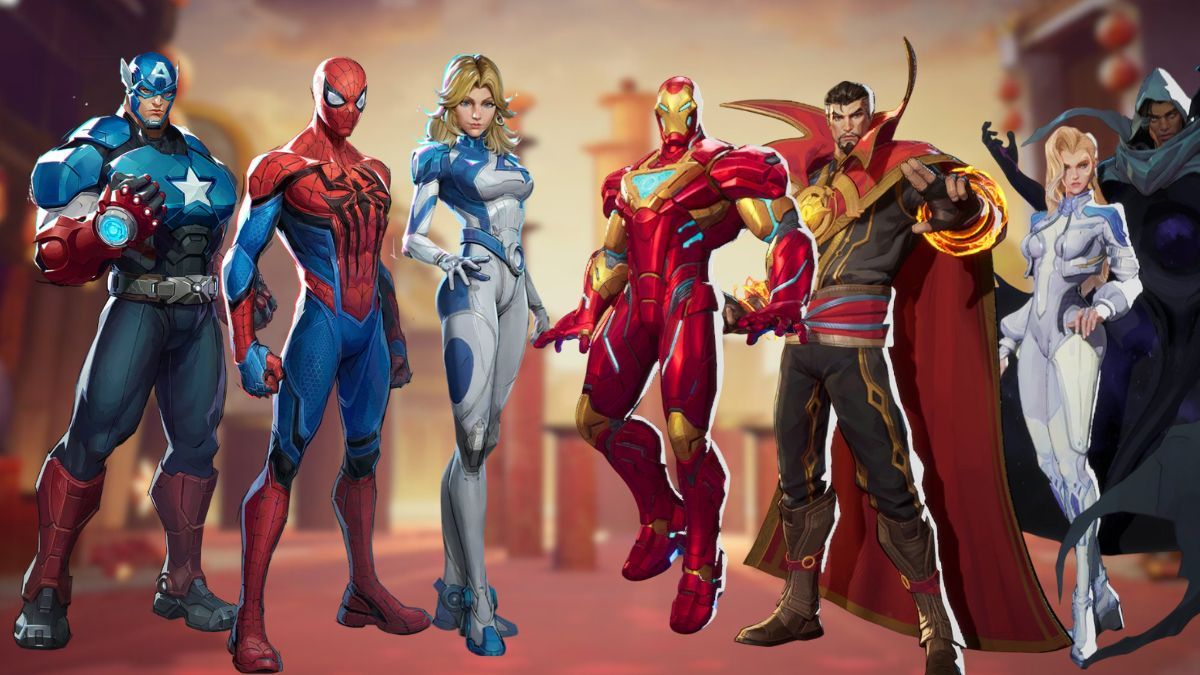
Team roles are crucial for successful strategies in Marvel Rivals. Each match requires a careful balance of:
Duelists - Heroes like Iron Man and Spider-Man who excel at eliminating opponents
Vanguards - Durable characters such as Hulk and Thing, who absorb damage and protect teammates
Strategists - Characters like Mantis and Luna Snow who keep allies alive and powered up
Hero abilities create powerful synergies when combined thoughtfully. A Magneto pull into Punisher's line of fire can secure quick eliminations. Doctor Strange's mirror dimension paired with Spider-Man's web shots locks down escape routes.
Understanding popular team setups reveals exploitable patterns:
Rush compositions crumble against strong crowd control
Support-heavy teams struggle versus burst damage
Area control strategies falter against mobile flankers
These insights shape counter-picking decisions, which is essential in the dynamic nature of team compositions. For instance, when facing a dive-heavy enemy team, selecting Mantis for protection and Spider-Man for crowd control neutralizes their aggression. Against ranged harassment, choosing fast-moving heroes like Star-Lord helps close distances quickly.
Moreover, learning about team-ups can further enhance your strategy as these combinations unlock unique abilities that can turn the tide of battle.
2. Countering the Meta Team Composition
The current meta team composition in Marvel Rivals centers around a powerful six-hero lineup:
Venom - Primary damage dealer
Magneto - Crowd control specialist
Scarlet Witch - Area control and burst damage
Punisher - Sustained ranged damage
Luna Snow - Secondary damage and utility
Mantis - Primary healer and support
This balanced setup excels at controlling teamfights through coordinated crowd control while maintaining steady damage output and healing. The composition's strength lies in its ability to adapt to different situations and maintain map presence.
Effective Counter Strategies:
Disrupt Their Formation Use Doctor Strange's mirror dimension to split the team
Deploy Magneto's magnetic pull to separate supports from damage dealers
Target Their Backline Black Panther's superior mobility helps bypass frontline heroes
Focus on eliminating Mantis to reduce team sustain
Control Space Magik's portals force Punisher out of optimal firing positions
Create alternative attack angles to break defensive formations
Pressure Points Attack when Scarlet Witch's abilities are on cooldown
Exploit gaps in Luna Snow's ice wall coverage
Time engagements when Venom lacks symbiote charge
A coordinated counter-team should prioritize swift engagements before the meta composition can establish their preferred fighting positions. Utilizing heroes like Iron Fist, who can excel in close-quarters combat, could also provide an advantage in disrupting the enemy's strategy.
3. Strategies Against Rush Team Compositions
Rush team compositions in Marvel Rivals excel at overwhelming opponents through relentless aggression. These teams typically feature heroes like Thor, Captain America, and Storm working in unison to create intense early-game pressure.
Key Rush Team Characteristics:
Fast-paced engagement tactics
High burst damage potential
Multiple mobility options
Coordinated offensive abilities
Effective Counter Strategies:
Magneto stands as a primary counter to rush compositions. His magnetic abilities create defensive zones that disrupt enemy movement patterns. By strategically placing magnetic fields, you can split rushing teams and neutralize their coordinated attacks.
Doctor Strange's defensive arsenal proves invaluable against aggressive pushes. The Mirror Dimension ability creates safe zones for your team while his Shields of the Seraphim spell blocks incoming damage during critical moments.
Rocket Raccoon's deployable turrets serve dual purposes:
Breaking enemy sightlines
Creating no-go zones that slow rush momentum
Providing sustained damage from multiple angles
Hulk's raw strength directly counters Captain America's shield-based strategies. His ability to grab and throw opponents disrupts formation-based rush tactics, while his durability allows him to withstand initial burst damage attempts.
Position your team behind natural cover and use these defensive abilities to force rush compositions into unfavorable engagements. This strategy depletes their resources and creates opportunities for counterattacks.
4. Defending Against Dive Team Compositions
Dive team compositions excel at swift target elimination through concentrated burst damage. Teams featuring Hulk, Venom, and Spider-Man can quickly overwhelm unprepared opponents with their aggressive playstyle.
Key defensive strategies against dive compositions:
Position Mantis near vulnerable teammates - her healing abilities create a protective buffer against burst damage
Use Adam Warlock's shield abilities to absorb initial dive attacks
Place Doctor Strange's mirror dimension to split diving enemies from their team support
Deploy Spider-Man's web abilities to catch and immobilize fast attackers like Thor
Effective positioning plays a crucial role in dive defense:
Keep support heroes behind tanks
Maintain sight lines between healers and potential dive targets
Stay near environmental cover to break line of sight
Create distance between high-priority targets
Doctor Strange serves as a powerful dive counter through his ability to trap aggressive heroes in his mirror dimension, effectively neutralizing Star-Lord's mobility advantages. This creates opportunities for your team to focus down isolated divers without fear of retaliation.
The combination of proper positioning, strategic ability usage, and coordinated team responses transforms dangerous dive attempts into advantageous situations for your team.
5. Breaking Area Control Team Setups
Area control teams excel at dominating specific map zones through strategic ability placement and coordinated positioning. A typical setup includes Groot's root abilities, Peni Parker's defensive mechanisms, and Iron Man's repulsor zones.
Key strategies to break these setups:
Flanking Maneuvers
Spider-Man's web-swinging enables quick access to alternate routes
Target isolated supports to force repositioning
Use vertical mobility to bypass choke points
Disruption Tactics
Namor's tidal waves wash away Groot's planted roots
Water-based attacks create unfavorable terrain for stationary defenses
Loki's illusions split enemy attention and create openings
Zone Breaking Combinations
Pair Spider-Man's web pulls with Groot's area denial
Use Rocket Raccoon's turrets to create crossfire situations
Deploy Magik's portals to bypass defensive perimeters
Area control teams struggle against heroes who can quickly reposition or create alternative attack angles. Effective counters include:
Black Panther's agility to bypass defensive lines
Storm's weather manipulation to clear controlled zones
Doctor Strange's ability to create alternate battle spaces
Teams running heavy area control often leave themselves vulnerable to swift, coordinated attacks from multiple directions. The key lies in identifying the main defensive anchor and systematically dismantling their setup through targeted pressure. For instance, utilizing Hawkeye's unparalleled marksmanship could effectively eliminate key targets from a distance, further destabilizing the enemy's area control.
6. Overcoming Triple Support (Triple Strategist) Compositions
Triple support compositions present a unique challenge in Marvel Rivals. These setups typically feature a single tank paired with two DPS characters, backed by three strategists focused on healing and defense. This creates a seemingly impenetrable wall of sustain that can frustrate many standard team compositions.
Breaking Through the Defense
Burst damage combinations prove essential against heavy healing teams
Groot's ultimate ability paired with Moon Knight's devastating attacks can secure quick eliminations
Thor's lightning strikes and Rocket Raccoon's weapon systems deliver consistent high damage output
Introducing Invisible Woman, a strategist hero who excels in battlefield control and support, can help disrupt enemy strategies with her powers of invisibility and force fields.
Key Counter Picks
Thor - Lightning chain damage bypasses defensive positioning
Rocket Raccoon - Area damage prevents healers from grouping up
Moon Knight - Multiple damage sources overwhelm single-target healing
Groot - Root abilities lock down support heroes
Wolverine, known for his aggressive close-quarters combat and regenerative healing, can also be an effective counter-pick due to his sustained engagement capabilities.
Tactical Approaches
Focus fire on a single support hero to create defensive gaps
Split the enemy team to prevent healing coordination
Apply constant pressure to drain support resources
Target the main tank when healing cooldowns are depleted
The success against triple support teams relies on precise timing and coordination. Combining high-damage heroes with crowd control abilities forces support players to make difficult choices between healing and positioning. Aggressive dive tactics paired with sustained damage output can quickly overwhelm even the most defensive setups.
However, it's important to remember that each character has its strengths and weaknesses. For instance, turret skills in certain games may need balancing to ensure fair play, just as some strategies in Marvel Rivals may require adjustments based on player feedback.
7. Tackling Anti-Flier Team Compositions
Anti-flier team compositions excel at shutting down aerial threats through precise targeting and vertical space control. These teams typically feature Doctor Strange's mystical barriers and Thing's powerful leaps to pressure airborne heroes.
Key Anti-Flier Heroes:
Doctor Strange - Creates aerial denial zones
Thing - Jumps to engage flying units
Punisher - Accurate hitscan weapons
Hela - Long-range precision attacks
Effective Counter Strategies:
Switch between ground and air movement unpredictably
Use terrain cover to break line of sight
Deploy ground-based heroes with strong vertical abilities
Heroes like Iron Man and Storm can adapt their flight patterns by staying close to cover, making quick dashes between safe positions. Ground-based heroes such as Spider-Man can challenge anti-air setups through wall-climbing and web-swinging mechanics.
Advanced Tactics:
Bait out Doctor Strange's cooldowns before engaging
Coordinate simultaneous attacks from multiple angles
Use Magik's portals to bypass vertical space control
The presence of hitscan heroes demands careful positioning and timing. Rocket Raccoon's turrets create additional pressure points, forcing anti-flier teams to split their attention between multiple threats. Black Panther's agility allows him to pressure these compositions while staying grounded, creating openings for aerial allies.
8. Countermeasures Against Poke Team Compositions
Poke team compositions excel at maintaining distance while dealing consistent damage through ranged harassment. These setups often feature heroes like Magneto harassing Vanguards from afar, supported by ranged DPS specialists such as Hela, Hawkeye, and Namor.
Key Elements of Poke Compositions:
Sustained ranged damage output
Strong zone control abilities
Defensive strategists providing healing
Crowd control to maintain spacing
Effective Counter Strategies:
Close-Range Pressure: Star-Lord's jet boots and Black Widow's grappling hook allow quick gap closing, disrupting the enemy's preferred engagement range
Shield-Breaking Tactics: Moon Knight's high-damage abilities can break through defensive cooldowns
Flank Routes: Spider-Man's web-swinging enables attacks from unexpected angles
Area Denial: Rocket Raccoon's turrets force poke teams to reposition
Hero-Specific Counters:
Black Panther's Kinetic Absorption turns sustained poke damage into offensive power
Storm creates weather effects that block enemy sightlines
Magik's portals enable instant team repositioning behind enemy lines
The key to dismantling poke compositions lies in aggressive positioning and sustained pressure. Mobile heroes excel at disrupting the enemy's spacing, while area denial tools force unfavorable engagements.
General Tips for Effective Counter Play in Marvel Rivals
Mastering counter play extends beyond hero selection - it's about understanding the deeper mechanics of team dynamics and strategic adaptation.
Key Elements of Effective Counter Play:
1. Read Your Opponents Early
Watch enemy movement patterns in the first minute
Identify their main damage dealers and support lines
Note which heroes they protect most aggressively
2. Adapt Your Positioning
Take unexpected angles to disrupt enemy formations
Create space between enemy supports and their damage dealers
Force unfavorable engagement ranges for their team comp
3. Target Priority Optimization
Focus high-threat heroes like Scarlet Witch that enable their strategy
Pressure supports when they use key abilities on cooldown
Isolate tanks from their healers during team fights
4. Flexible Role Switching
Switch heroes mid-match to counter enemy adaptations
Fill gaps in your team's composition as needed
Adjust your playstyle based on team needs
Advanced Counter Tactics:
Use map geometry from our guide on Marvel Rivals Maps to break line of sight against ranged comps
Time your engagements with teammate ultimate abilities
Track enemy cooldowns to exploit vulnerability windows
Create space for your damage dealers through strategic pressure
The most successful players combine these tactical elements with strong mechanical skills, turning theoretical counter strategies into practical advantages during matches. Whether you're utilizing the ice-based superpowers of Luna Snow, the mid-range projectile expertise of Winter Soldier, or the agility and unique combat style of Squirrel Girl, remember that adaptability and understanding of your opponent's strategy is key.
Conclusion
Mastering team composition counters in Marvel Rivals opens up new strategic possibilities. The key lies in recognizing opponent patterns and adapting your hero choices accordingly. Each match presents unique opportunities to disrupt enemy strategies - whether breaking through triple support setups with burst damage or neutralizing dive compositions through calculated defensive play.
Success demands both mechanical skill and tactical awareness. Practice identifying team compositions early in matches and select heroes that exploit their weaknesses. Stay flexible with your hero pool and build confidence in multiple counter-strategies.
Remember:
Study your opponents - Learn to read team compositions quickly
Build versatility - Master heroes across different counter roles
Trust your team - Coordinate counter-picks with teammates
Keep adapting - The meta evolves, so should your strategies